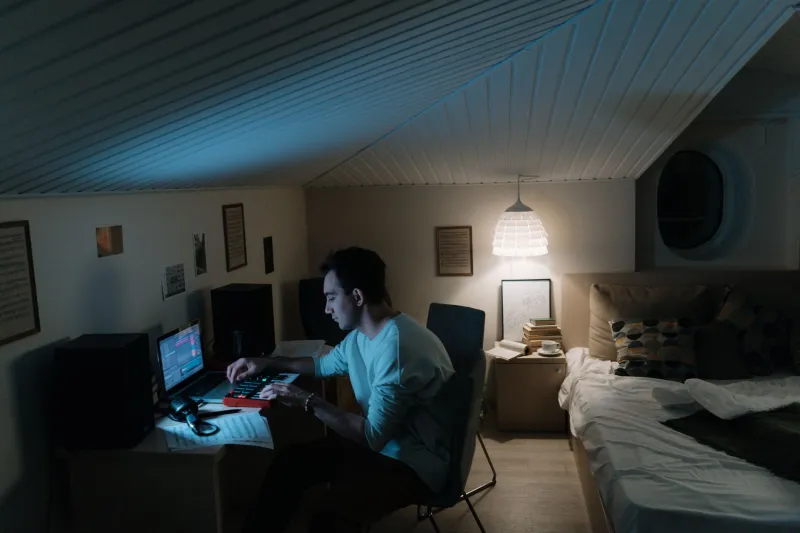
The Mixtape Refuses to Die: A Love Letter to Human-Made Playlists
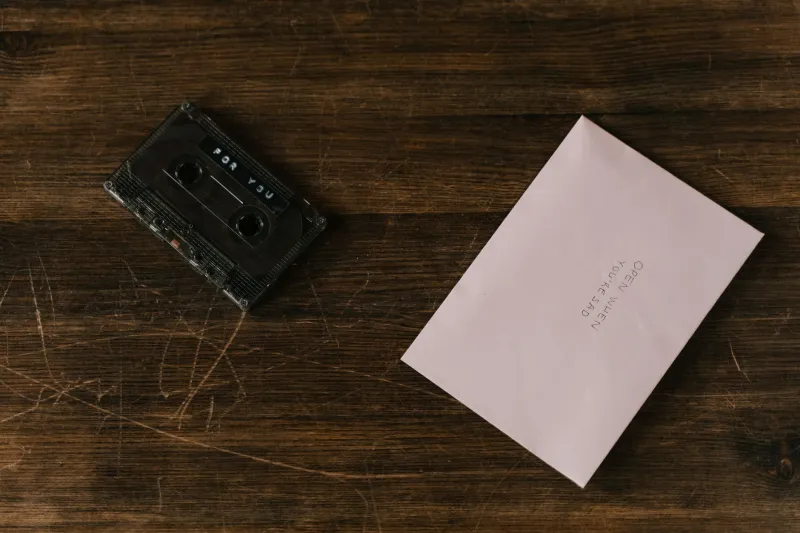
Let me tell you about the best playlist I ever received.
It was 2016. A friend burned me a CD — an actual CD, in a scratched jewel case — titled Songs For When You Get There. I was moving across the country, from Ohio to California, and she'd built a tracklist that mapped the drive: Midwest heartland rock for the flat early miles, desert blues as the landscape turned brown, then a run of shimmering West Coast indie for the final stretch. No algorithm made that. No algorithm could have. She knew things about me that no recommendation engine ever would — that I get quiet on long drives, that I pretend to hate harmonica, that I don't.
I've been thinking about that CD a lot lately, because streaming platforms have gotten terrifyingly good at guessing what I want to hear. And I'm here to argue that being good at guessing is exactly the problem.
The Algorithm Knows What You Liked. It Doesn't Know You.
Here's the thing about recommendation engines: they're mirrors. They take your history and hand it back to you with a 3% twist. Listen to enough indie folk and you'll get more indie folk, each playlist a slightly warmer bath in the same water. It's frictionless, it's pleasant, and it will never, ever surprise you.
Real discovery requires friction. It requires someone whose taste intersects yours but doesn't overlap completely — someone who loves the same band but for the wrong reasons, someone who'll follow a sound into a genre you've never touched. A great playlist is an argument. It has a point of view, a shape, a beginning and an end. An algorithmic mix has none of those things. It's a queue, not a statement.
There's a reason we still talk about the mixtapes of our youth and not the shuffle sessions of our youth. One is a memory. The other is filler.
The Curators Are the New Tastemakers
To stress-test my own argument, I talked to a few people who run popular indie playlists — the human kind, with actual humans behind them.
Dana R., who curates a 40,000-follower indie playlist out of Austin: "I listen to every submission. Every single one. Last week I added a track from a kid in rural Vermont because the bridge reminded me of driving to Galveston with my sister. An algorithm can't do that. It doesn't have a sister, and it's never been to Galveston."
Marcus T., who runs a late-night lo-fi playlist from Philadelphia: "My rule is the playlist has to work as a whole. If I skip a song while testing it, the song's out. You can't skip-test an algorithm. It doesn't care if track seven kills the mood."
That's the difference, right there. Curation is editorial. It's the same reason you trust a friend's restaurant recommendation over a sponsored ad — one of them has skin in the game.
What We Lose When We Outsource Our Taste
I'm not anti-algorithm, exactly. It's great for background music, for the gym, for the times when you want sound instead of music. But there's a slow erosion that happens when every listening decision is made for you. Your taste stops being a living thing you tend and becomes a profile that gets optimized.
And the social layer disappears entirely. Music used to be a currency between people — you made someone a tape and it meant something. There's a whole generation growing up who've never experienced the specific terror and thrill of handing someone a tracklist you made for them.
The good news: the tools are still there. Every streaming platform lets you build and share playlists. The barrier isn't technology. It's intention.
The Challenge
So here's my ask, ArohaMuzic readers: this week, make a playlist for one specific person. Not for followers. Not for the algorithm to chew on. For your roommate, your dad, your crush, the coworker who always asks what you're listening to.
Give it a title only they'd understand. Put a track on it you're nervous about. Order it on purpose — first song to last.
Then send it, and tell us what happened. Drop your 'made-for-a-friend' playlist in the comments or tag us on socials. We'll feature our favorites in an upcoming post, because obviously we will — we're curators too.
The mixtape refuses to die. It's just waiting for you to pick it back up.