Cheap Rent, One Good Dive: Why College Towns Keep Manufacturing Indie Scenes
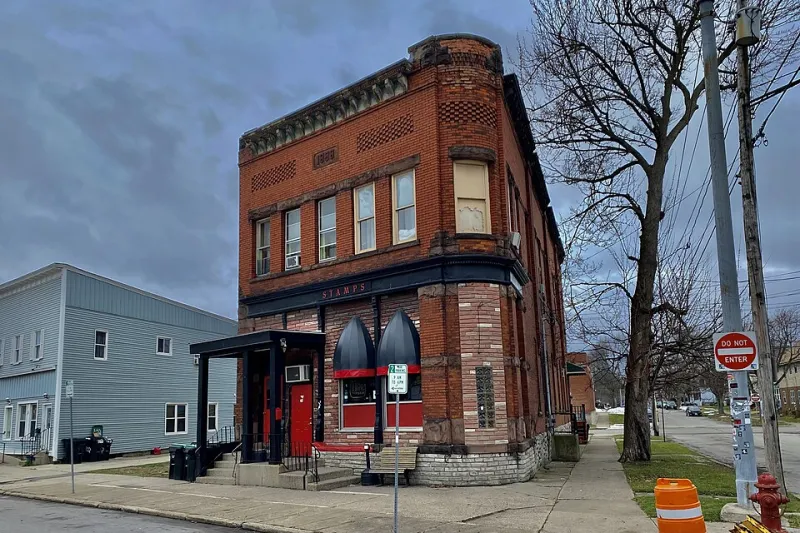
Photo: Andre Carrotflower, CC BY-SA 4.0, via Wikimedia Commons
There's a pattern hiding in the liner notes of American indie. Look closely at where your favorite bands actually formed and you'll find yourself staring at a map dotted with college towns — places with one traffic light, a state school, and a population that drops by half every summer.
Olympia gave us Bikini Kill and Beat Happening. Athens gave us R.E.M. and, decades later, a whole second wave. Bloomington, Indiana — a town of roughly 80,000 people — has quietly punched out everyone from John Mellencamp's scene roots to Mystery Jets-adjacent oddballs and a rotating cast of Secretly Canadian artists. These aren't accidents. They're ecosystems. And every ecosystem needs the same three ingredients.
Ingredient One: Rent a Musician Can Actually Afford
The boring truth behind every legendary scene is mundane: the rent was cheap enough that nobody needed a real job. A four-bedroom house near campus split five ways leaves enough left over for a practice space, a van payment, and a PA that's held together with gaff tape and optimism.
That math doesn't work in Brooklyn anymore. It barely works in Nashville. But in a town where a duplex near the university runs a fraction of coastal prices, a 22-year-old with a four-track and no prospects can survive long enough to write a record. Scenes aren't built on talent alone — they're built on the luxury of being broke without being desperate.
Ingredient Two: The Boredom Engine
Here's the part nobody puts in the brochure: college towns are deeply, productively boring. When the touring act skips your town and the movie theater is showing the same film for the third week, you start a band. Or a zine. Or a label out of your dorm room.
Isolation breeds collaboration. When there are only thirty people who care about weird music, all thirty of you end up in the same basement, trading instruments and drummers and riffs. Compare that to a big city, where the indie kids are scattered across ten neighborhoods and three boroughs, and the scene becomes a spreadsheet instead of a living room.
Ingredient Three: One Sticky-Floored Venue (and Its Supporting Cast)
Every one of these towns has a room — usually one — that functions as the scene's town square. In Olympia it was the Capitol Theater and the ever-churning house show circuit. In Bloomington, it's the Bishop Bar and the legendary Second Story before it. The venue itself doesn't need to be nice. Frankly, it's better if it isn't.
But the venue can't do it alone. It sits at the center of a triangle:
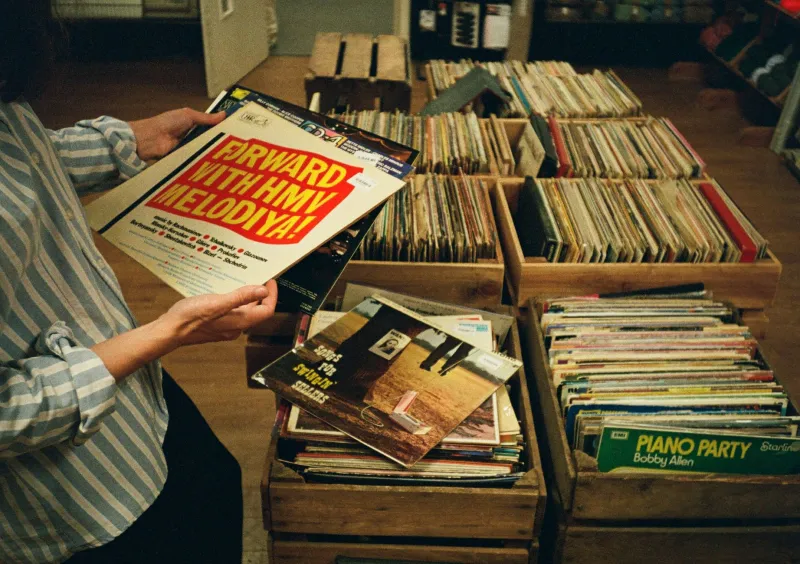
- The record store, where the guy behind the counter puts a local 7-inch in your hands and tells you it's going to be huge (and is occasionally, infuriatingly, right)
- The campus radio station, broadcasting at 200 watts to the dorms, spinning the local band's demo at 11 PM on a Sunday
- The college paper or alt-weekly, willing to review a show nobody else would cover
Take one of those away and the whole thing wobbles. Take two and it collapses. That's why every think piece about a dying scene is really a story about a closing venue or a sold radio license.
The Summer Problem (and Why It Doesn't Matter)
Skeptics will point out the obvious flaw: college towns empty out in June. The scene loses half its audience for three months.
But here's the thing — the people who stay are the true believers, and summer is when the work gets done. Fewer shows, longer sets, more time in the practice space. The academic calendar actually paces the scene: write all summer, debut in September, tour on winter break, record over the next summer. The rhythm of the semester becomes the rhythm of the band.
Can You Manufacture This? Probably Not
Cities have tried. Developers build "creative districts" with live-work lofts and stage a scene like a theme park. It never quite lands, because the secret ingredient was never the real estate. It was twenty broke kids with nothing to do, one bartender who'd let an unknown band play a Tuesday, and a radio DJ who didn't care that the recording was hiss-heavy.
So the next time a band you love turns out to be from a town you'd never planned to visit, don't be surprised. Check the map. There's probably a state school, a dive bar with a legendary sound guy, and a record store where somebody's already holding your next favorite album behind the counter.
The venue isn't just where the show happens. In these towns, the venue is the whole show — and it's been quietly headlining American indie for fifty years.