After Last Call: The Person With the Aux Cord Is Quietly Breaking Bands
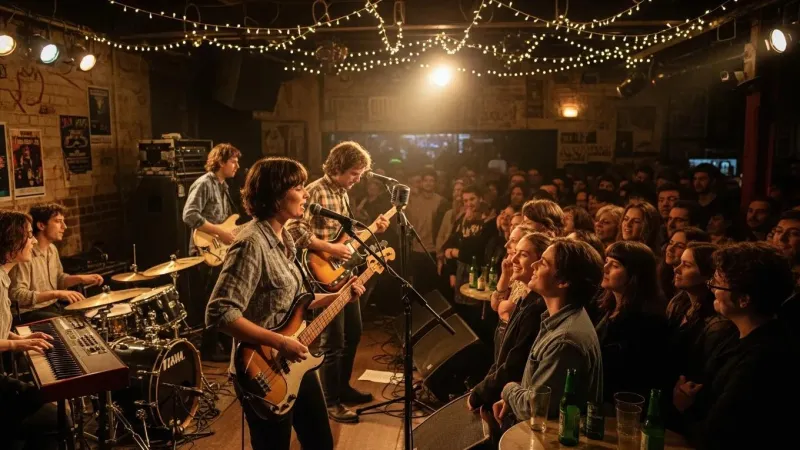
Photo: mike connor, CC BY 2.0, via Wikimedia Commons
It's 12:50 a.m. at a bar two blocks off the main strip, the kind of place with a sticky rail and a sound system that cost more than the fixtures. The band packed up forty minutes ago. Half the crowd left. The other half is still here, and then a song comes on — something mid-tempo, warm, minor key, a vocal that sits low in the mix — and the entire room changes posture at once. People who were reaching for their jackets sit back down.
Nobody looks at the bar. Nobody says thank you. But somewhere between the register and the dishwasher, a person just did the most effective piece of music promotion in this city all week.
The Aux Is a Job Title Now
We spend a lot of energy talking about who breaks bands — playlist editors, TikTok, college radio, that one friend in the group chat. The person running the sound between sets almost never makes the list, which is strange, because they're the only tastemaker with a captive, slightly drunk, emotionally available audience.
A venue between sets is a very specific listening environment. Nobody's there to hear music. Everybody's there anyway. That's the whole trick. You're not competing with other bands, you're competing with a conversation about someone's ex, and if you win that fight you get a reaction that is almost impossible to buy: a room full of people asking the bartender what this is.
And increasingly, the bar is where the answer comes from. Not some corporate playlist pushed down from a chain's regional manager. A person, on their phone, with opinions.
How a Song Actually Gets Into Rotation
I asked around at half a dozen rooms in Austin, Philadelphia, and Portland this fall, and the path is almost always the same.
First: the personal playlist. Every bartender I talked to has one — a private, deeply curated, forty-to-two-hundred-song thing they've been building for years. This is the mothership. Songs get into it through a roommate, a show they worked, a DJ night they went to on their night off, or occasionally an artist who slid into their DMs like a normal human being.
Second: the venue's collaborative playlist. This is where the mothership gets filtered. Most rooms run some kind of staff-shared list, and whoever's closing gets veto power. This is the stage where a song dies. Something that slaps at 9:30 p.m. on a Friday is a war crime at 1:15 a.m.
Third: the licensing layer. Depending on the room, you're either on a consumer account, a commercial platform, or an old jukebox app that people feed dollar bills into. That determines how fast new music can actually appear. A band that dropped a single on Tuesday is not getting played Thursday at the bar running a licensed background service with a two-week refresh. A bar with a jukebox is a totally different beast — that's the crowd picking songs, and the crowd is picking whatever's already familiar.
Why 1 A.M. Is a Different Genre
Here's the thing that surprised me: the people choosing the music aren't picking their favorite songs. They're picking for a room at a specific hour, and the hour has rules.
Early evening wants energy but not aggression — you're easing people into a night, so you get bright, mid-tempo, hooks up front. Between sets wants neutrality with a little texture, so nobody's attention gets stolen from the merch table. Last call is its own thing entirely: slower, warmer, keys with fewer sharps, vocals that feel like somebody's talking to you. Songs about staying out get replaced by songs about going home, even though nobody's going home yet.
The best bar DJs are essentially programmers. They know the drop-off point where a crowd turns. They know the song that makes people order one more round. A 1 a.m. track doesn't have to be amazing — it has to be a place to be. That's a completely different skill than having good taste, and it's why the same eight songs keep working in every city in America.
What the Bar Knows That the Algorithm Doesn't
Streaming tells you a song was saved. It doesn't tell you the room went quiet.
Bartenders get to watch the reaction in real time, from a fixed position, with a clear view, without a phone in their hand. They hear a song with a conversation over it and they hear the same song with no conversation over it, and the second one goes in the playlist. That's a feedback loop most artists would kill for, and it's running five nights a week in basically every mid-size venue in the country.
They also know what the show was like before the band played. A band that was rude to the sound person, played ninety minutes on a forty-five-minute slot, and left their cups on the stage is not getting a follow-up play no matter how good the record is. The bar remembers. The bar always remembers.
How a Band Wins the Cord
If you're an emerging act and you want in, here's what actually works, based on what the people on the other side of the rail told me.
Be a person, not a campaign. A short, specific message — "hey, you played our track after our set in March, here's the new one, no pressure" — beats a press kit every time. Bartenders are not gatekeepers who need to be pitched. They're people who like music and resent being marketed at.
Give them a physical thing. A single-song card, a cassette, a sticker with a QR code on it that goes straight to one song. Not a link tree. One song.
Play their bar on a Tuesday. The relationship is local. A room you've played four times is a room where the staff knows your name, and staff who know your name play your record at 12:50 a.m. in front of a crowd that just decided to stay.
And make the calm song. This is the one nobody wants to hear. The banger gets you the set. The quiet, warm, mid-tempo song is what gets you the after-hours rotation, and that's where the actual discovery happens — not from a stage, from a speaker, in a room that isn't paying attention yet.